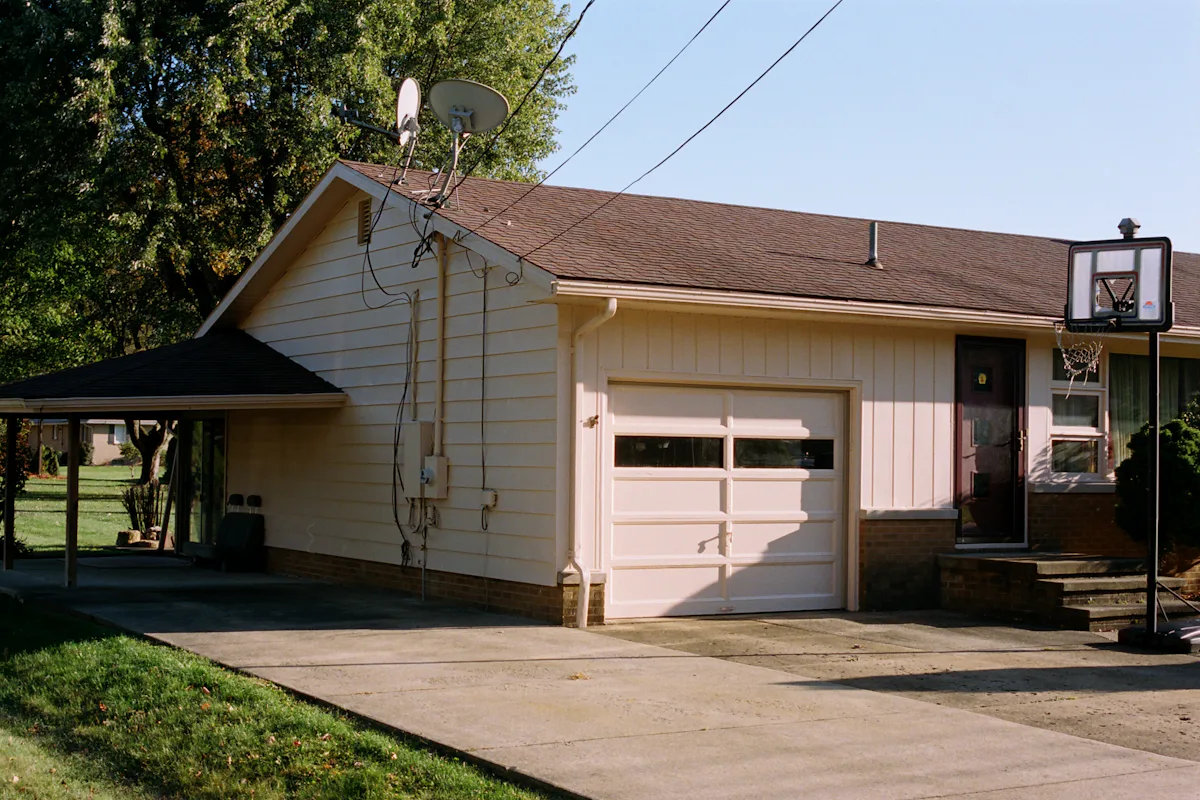
A garage conversion turns an existing attached or detached garage into a legal dwelling with a kitchen and bathroom. It reuses the walls, roof and slab you already have, which is why published Austin costs for conversions sit well below new detached units. The condition of that structure decides the real savings.
Can any Austin garage be converted?
Not always. To become a dwelling, the space must meet residential building code for ceiling height, egress windows, insulation, ventilation and fire separation. A garage built with a thin slab, no footings or a low roof may need so much work that a new unit makes more sense. We look at the slab, framing and roof before suggesting a conversion.
What usually has to change?
- The garage door opening is framed in with a wall, windows or a door.
- A new plumbing line is cut through or run under the slab for the kitchen and bath.
- Insulation and HVAC are added; most garages have neither.
- The floor is raised or leveled where the slab slopes toward the door.
- Electrical service is checked for the added load.
Does the converted unit count toward my floor area?
Inside the McMansion boundary, Austin already counts garages as floor area, so converting one does not usually add new area. Adding onto the garage would. The HOME amendments also offer a preservation bonus that can exempt preserved portions of existing structures from floor-area calculations when they meet the code's conditions.
What does a garage conversion cost in Austin?
As of October 2026, a published Austin guide puts garage conversions at about $80,000 to $150,000. The same guide's own line-item budget totals less, which shows how much the range depends on what is included. Read how to compare ADU quotes.
Is it different outside Austin?
Yes. Round Rock adopted rules for garage conversions in 2016, and Pflugerville and Cedar Park bar separate utility meters for ADUs. See suburban ADU rules.